 Pin
Pin The first time I tasted mango sticky rice wasn't at a fancy restaurant—it was from a street vendor near Bangkok's Chatuchak Market on an unbearably hot afternoon. I was skeptical about mixing rice with fruit until that first spoonful hit my tongue: the rice was impossibly creamy, the mango was perfectly ripe and cool, and everything just made sense together. I've chased that exact feeling ever since, and honestly, making it at home tastes even better because I can eat it straight from the kitchen without pretending to share.
I made this for my neighbor after she helped me move boxes into my apartment, and she ate three plates before admitting she'd never had Thai food before. Watching her close her eyes during that first bite reminded me why desserts matter—they're small moments where someone pauses and just enjoys something good.
Ingredients
- Glutinous (sweet) rice, 1 cup: This isn't regular rice—it's starchy and sticky in the best way, and soaking it overnight actually makes a difference you'll taste.
- Coconut milk, 1 cup (full fat): Don't use the low-fat version; it won't coat the rice the same way, and that creamy texture is the whole point.
- Granulated sugar, 1/4 cup: Dissolves into the coconut milk to create a light glaze that clings to every grain.
- Salt, 1/4 teaspoon: A tiny amount that balances sweetness and lets the mango shine without tasting salty.
- Large ripe mangoes, 2: Pick ones that give slightly when you press them—they should smell sweet and feel heavy for their size.
- Coconut cream, 2 tbsp (optional): A drizzle on top adds richness, but honestly the dish is complete without it.
- Toasted sesame seeds or mung beans, 1 tbsp (optional): Adds a tiny crunch and looks intentional when plated.
Tired of Takeout? 🥡
Get 10 meals you can make faster than delivery arrives. Seriously.
One email. No spam. Unsubscribe anytime.
Instructions
- Prepare the rice properly:
- Rinse the glutinous rice under cold water until the water runs completely clear—this removes excess starch and keeps it from turning into paste. Soak it in fresh water for at least 4 hours or overnight; this softens the grains so they steam evenly and taste tender, not chalky.
- Steam until just right:
- Line your steamer basket with cheesecloth and spread the drained rice evenly. Steam for 25 to 30 minutes until the rice is tender and cooked through but still holds its shape—you want it soft, not mushy. You'll know it's done when a grain breaks easily between your fingers.
- Make the coconut sauce:
- Combine coconut milk, sugar, and salt in a saucepan and warm it gently over medium heat, stirring until the sugar dissolves completely. Never let it boil or the coconut milk can separate; just let it get warm enough that the sugar melts into a smooth sauce.
- Marry the rice and sauce:
- While the rice is still warm, transfer it to a bowl and pour in about three-quarters of the coconut sauce, stirring gently to coat every grain. Cover the bowl and let it sit for 10 to 15 minutes so the warm rice absorbs the sauce and becomes silky—this is where the magic happens.
- Slice the mango:
- Peel and slice your mangoes while the rice absorbs the sauce; you want the fruit at room temperature or slightly cool when you plate.
- Plate and serve:
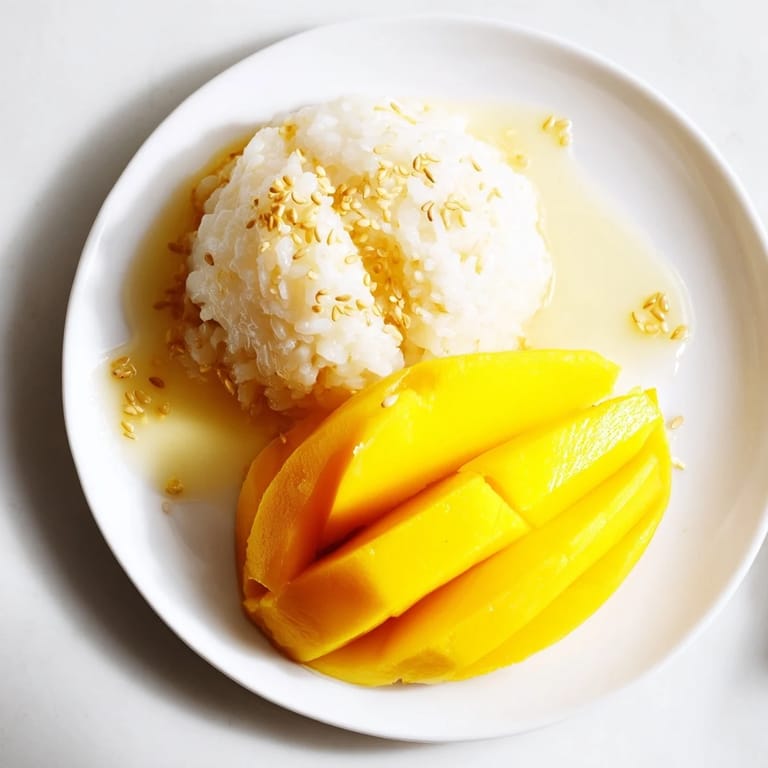
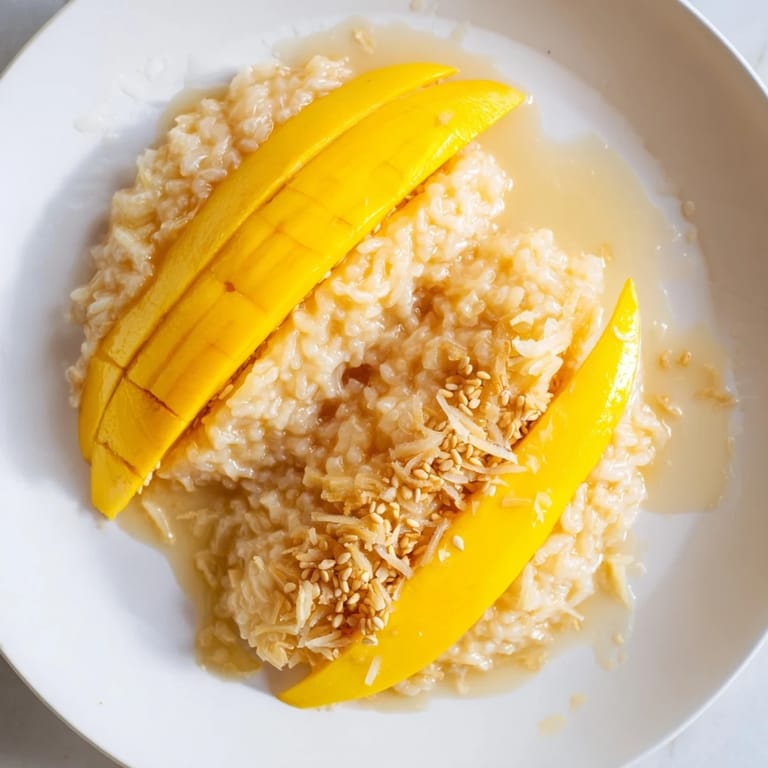
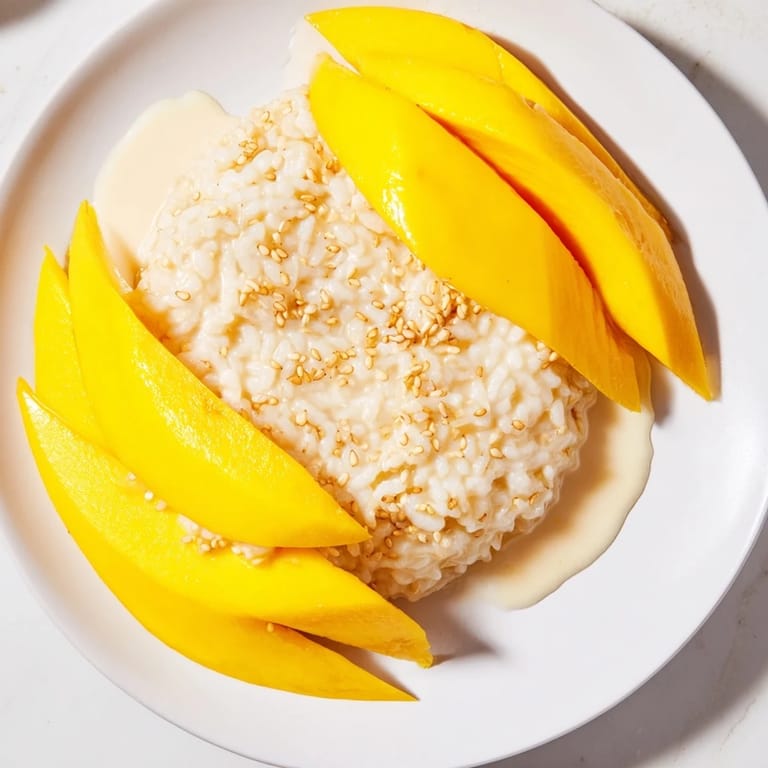
- Spoon warm sticky rice onto each plate, arrange mango slices in a little arc alongside, and drizzle the remaining sauce over the top. Add a small dollop of coconut cream and a sprinkle of sesame seeds if you're using them—this makes it look like you planned it.
 Pin
Pin There's something about the moment when you taste mango sticky rice for the first time that shifts how you think about desserts. Sweet and savory aren't really separate anymore once you've had warm coconut rice melting against cool, juicy mango.
Choosing Your Mango Wisely
Not all mangoes are created equal, and I learned this the hard way after buying glossy ones that looked perfect but tasted like nothing. The best ones are often uglier—slightly dull skin, maybe a few small blemishes—and they smell sweet near the stem. Ask the produce person when they arrived; mangoes that have been sitting for weeks taste watery. If you're in a region where Thai mangoes aren't available, look for Ataulfo or Kent varieties; they have that balance of sweetness and slight tartness that makes this dish sing.
The Coconut Milk That Changes Everything
I used to grab whatever coconut milk was on sale, and the dish never tasted right—sometimes greasy, sometimes thin and flavorless. Then I realized I was using lite coconut milk and low-quality brands that separate immediately. Full-fat coconut milk from reputable brands (I look for ones that list mostly coconut and water) creates a sauce that clings to the rice and tastes genuinely creamy. If you can't find full-fat, let the can sit upside down for a few hours and use the thick cream that settles at the bottom mixed with the liquid—it makes a difference.
Variations and Upgrades
Once you nail the basic version, small changes become fun experiments. I sometimes substitute palm sugar for granulated sugar because it adds a deeper, slightly caramel-like flavor that pairs beautifully with mango. A few pandan leaves tucked under the cheesecloth while steaming makes the rice smell incredible. Some versions add a tiny pinch of jasmine or a few drops of rose water to the coconut sauce, but only if you want to be fancy.
- Try adding pandan leaves to the steaming water for a delicate floral note that feels more authentic.
- Palm sugar creates a richer sauce if you want to push the sweetness in a different direction.
- Toast your own sesame seeds in a dry pan for 2 minutes to bring out their nutty flavor before using them as garnish.
 Pin
Pin This dessert is proof that sometimes the simplest dishes are the ones worth making again and again. The fact that you can have it on the table in under an hour makes it even better.
Recipe FAQ
- → What type of rice is used for sticky rice?
Glutinous (sweet) rice is essential for achieving the sticky texture typical in this dish.
- → How do you prepare the coconut sauce?
Simmer coconut milk with sugar and salt gently until sugar dissolves; avoid boiling to keep a smooth texture.
- → Can pandan leaves be used in this dish?
Yes, pandan leaves can be added during steaming to infuse a fragrant aroma into the rice.
- → Is there an alternative sweetener to granulated sugar?
Palm sugar can be used for a richer, caramel-like flavor in the coconut sauce.
- → How should the dish be served or garnished?
Serve the sticky rice with mango slices, drizzle remaining coconut sauce on top, and optionally garnish with coconut cream and toasted sesame seeds or mung beans.
- → What is the best way to store leftovers?
It is recommended to enjoy this dish fresh as refrigeration may harden the sticky rice, affecting texture.