 Pin
Pin I was browsing through a gallery opening in the neighborhood when I stopped in front of a painting that was all dramatic blacks and brilliant golds, the kind of composition that made you lean in closer. Walking home, I couldn't shake the image, and by the time I reached my kitchen, I was already thinking about how to translate those layered shadows and luminous contrasts onto a plate. What started as a visual obsession became this dish, where every element has a role in the conversation between light and dark.
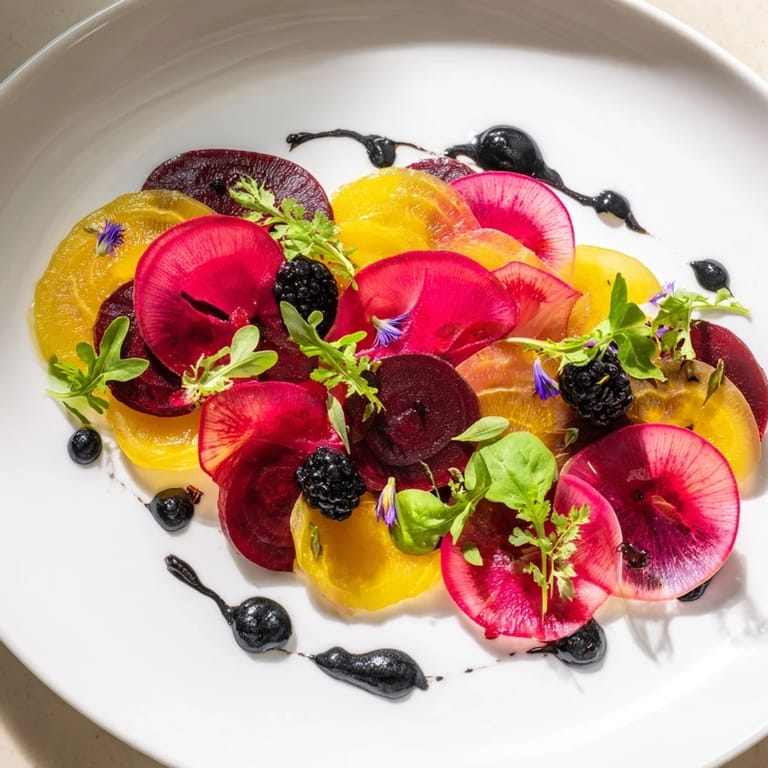
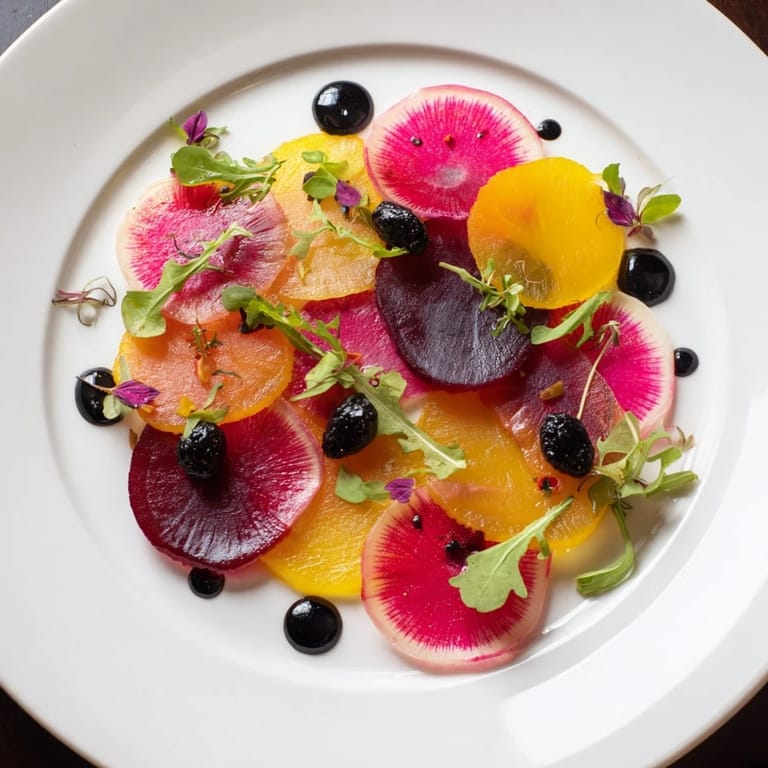
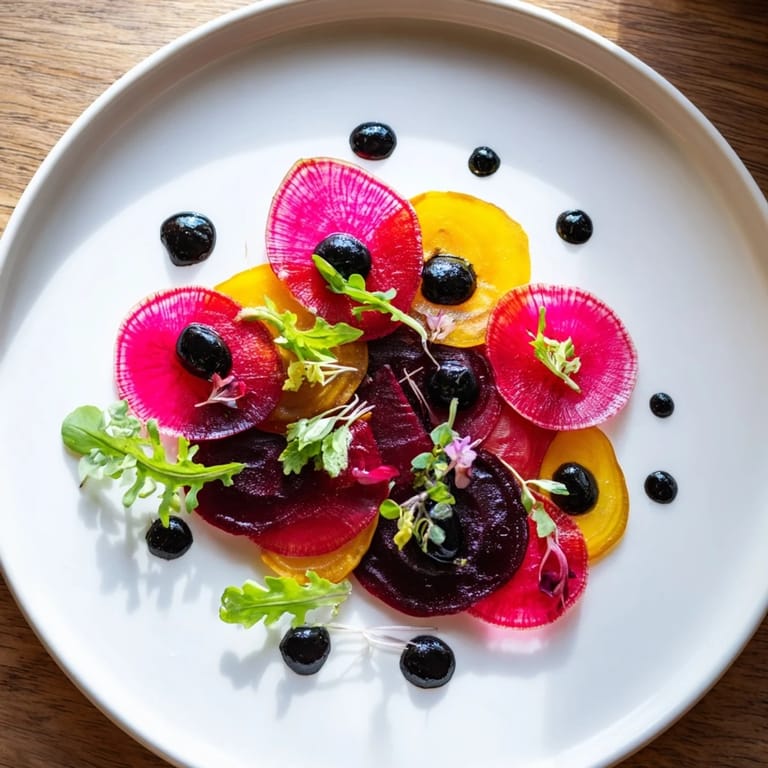
The first time I plated this for friends, I was honestly nervous about whether stacking vegetables and berries would read as intentional or just... messy. But the moment I added those dark drizzles of black tahini, everything clicked into place, and suddenly it wasn't just a salad anymore—it was a little edible artwork sitting in the middle of the table, and nobody touched it for a full minute because they were too busy looking.
Ingredients
- Golden and red beets: One medium of each, peeled and sliced paper-thin so they let light pass through and create that glowing, translucent effect that's half the magic here.
- Watermelon radish: Half a cup thinly sliced—it's the surprise bright spot that makes people ask what it is, and its natural pink-and-white pattern does the visual work for you.
- Baby arugula: One cup, peppery and delicate, adding texture and that necessary green note to keep the plate from feeling too dark and moody.
- Blackberries and black olives: Half cup berries and a quarter cup halved olives—these are your shadow players, sitting behind the brighter elements to create depth and silhouette.
- Black tahini: Two tablespoons, or regular tahini mixed with squid ink if you're playing around—this is your artistic element, the thing that turns the plate into a statement.
- Extra virgin olive oil, lemon juice, and honey: Three tablespoons, one tablespoon, and one teaspoon respectively, whisked together into a dressing that's bright enough to cut through all the earthy vegetables without overpowering them.
- Microgreens and edible flowers: For garnish, these finish the visual story with unexpected texture and color variation.
Tired of Takeout? 🥡
Get 10 meals you can make faster than delivery arrives. Seriously.
One email. No spam. Unsubscribe anytime.
Instructions
- Slice your beets with intention:
- Use a mandoline if you have one—it keeps the slices thin and even, which is what makes them beautiful. If you're using a knife, go slowly and let the blade do the work, keeping your slices as consistent as possible.
- Build your base with pattern:
- Lay golden and red beet slices overlapping on your plate, alternating colors like you're creating a visual rhythm. This is where the foundation of the shadow play starts, so take a moment to make it feel intentional.
- Layer in the brightness:
- Fan the watermelon radish over the beets, then scatter arugula across so the greens catch some light. You're creating contrast now, setting up the bright elements that will make the dark ones pop.
- Place your shadow elements:
- Tuck blackberries and black olives strategically behind or underneath the brighter ingredients—they should peek through like silhouettes, creating depth and mystery on the plate.
- Whisk and dress:
- Combine olive oil, lemon juice, honey, salt, and pepper, then drizzle it gently over the vegetables so every element gets a taste of brightness and acidity.
- Add the artistic touch:
- Spoon small dollops of black tahini around the plate and smear them slightly with the back of your spoon—this is where the dish transforms from salad into art, so let yourself be a little loose and expressive about it.
- Finish with garnish:
- Crown everything with microgreens and edible flowers if you have them, adding final layers of color and texture that complete the visual story.
 Pin
Pin There's a particular quiet that happens when people stop talking to look at their food, and that's the moment this dish lives for. It's when the aesthetics shift from being about impressing someone to becoming about creating an experience, and that shift is where eating becomes memorable.
The Magic of Color Contrast
Color contrast isn't just about making things look pretty—it's about guiding how people experience the plate. When bright elements sit against dark ones, your eye moves around the dish naturally, discovering elements you might have missed if everything was the same tone. This is why the golden beets matter as much as the red ones, and why the arugula can't be replaced by something darker. You're creating visual movement and visual rest, working the same way a painter does.
Working with a Mandoline
The first time I used a mandoline, I nearly took off the tip of my thumb and swore I'd never touch one again. But once I got comfortable with it, it became the difference between a salad that looks homemade and one that looks intentional. The key is using the guard it comes with, moving slowly, and understanding that speed isn't the point—evenness is. If you're nervous, a very sharp knife and patience will get you the same results, just with more time.
Serving and Pairing Ideas
This works beautifully as an opening course before something richer, or as a light lunch alongside good bread and cheese. The earthiness of the beets and the peppery arugula pair wonderfully with wines that have similar qualities—Sauvignon Blanc brings a crisp counterpoint, while a light Pinot Noir echoes the earthiness and lets the visual drama be the real star of the meal.
- Serve immediately after plating so everything stays crisp and the visual impact is strongest.
- If you need to make it ahead, prep all components and assemble only when you're ready to serve.
- For a vegan version, swap honey for agave syrup and you haven't lost a thing in terms of flavor or balance.
 Pin
Pin There's something quietly powerful about making food that works as hard as it can at every level—nourishing you, delighting your senses, and catching the light in a way that makes you want to stop and really look. That's what this dish is about.
Recipe FAQ
- → How do I achieve the shadow effect in this dish?
Position dark ingredients like blackberries and black olives beneath or behind bright-colored vegetables to create artistic silhouettes and depth.
- → Can I substitute honey in the dressing?
Yes, agave syrup works well as a vegan alternative to honey without altering the flavor balance.
- → What tools are best for slicing the beets thinly?
A mandoline slicer ensures uniformly thin slices, but a sharp knife can also be used carefully.
- → Are there any allergens in this dish?
It contains sesame from tahini and possible olive pits if the olives aren't fully pitted; check packaged items for gluten traces if sensitive.
- → What type of wine pairs well with this starter?
Crisp Sauvignon Blanc or light, earthy Pinot Noir complement the flavors and textures beautifully.
- → Can I add more depth to the dark accents?
Incorporating black garlic or roasted purple carrots can enhance the shadow elements with extra flavor.