 Pin
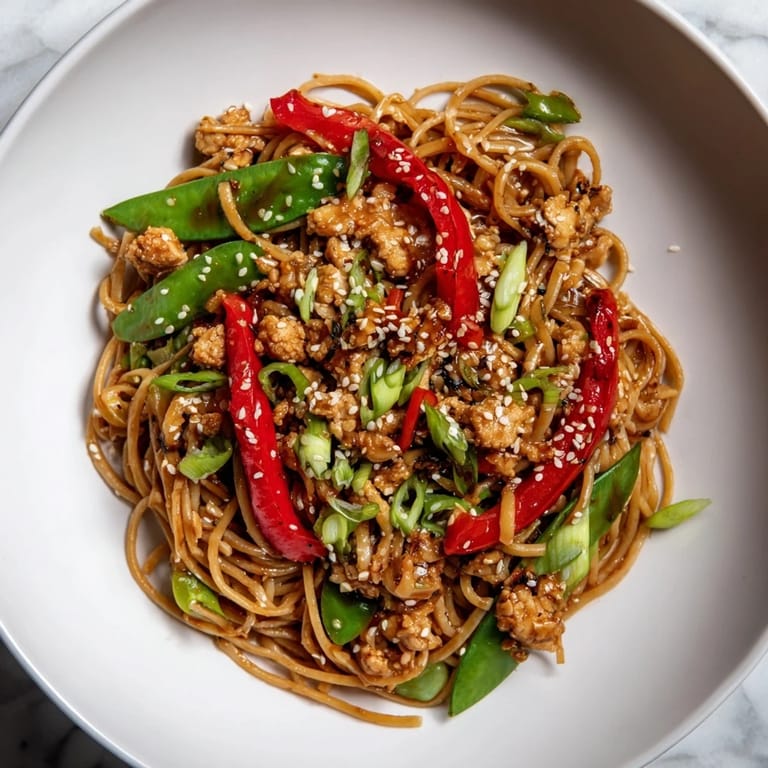
Pin There's a particular Tuesday evening I think about whenever I make this dish—I'd just discovered a bottle of hoisin sauce tucked behind someone's pantry staple jars, and I was determined to use it for something that didn't feel like I was following a recipe card verbatim. Ground chicken was what I had, linguine was what called to me, and somewhere between the sizzle of garlic hitting hot oil and the sweet-savory aroma filling my kitchen, I realized fusion cooking doesn't have to be complicated. It just has to feel right.
I made this for friends who kept asking what smelled so incredible, and when I told them it was something I'd thrown together, they didn't believe me. There's something about serving something this flavorful in a casual, no-fuss way that makes people linger a little longer at the table, asking for seconds before the first plate is even empty.
Ingredients
- Linguine (350g): The pasta absorbs and carries the sauce beautifully, and cooking it until al dente gives you the right texture to contrast with the vegetables.
- Ground chicken (450g): It cooks faster than larger pieces and breaks into small, sauce-coating bits that make every bite feel full of flavor.
- Red bell pepper: The sweetness mellows the umami from the hoisin, and thin slices mean it stays crisp even when everything mingles together.
- Snap peas: They add a satisfying crunch that doesn't disappear into the sauce, keeping the dish from feeling one-note.
- Green onions: Reserve some for garnish—that fresh, mild onion bite at the end reminds you everything was just cooked.
- Garlic and ginger: These two are the backbone; don't skip mincing the garlic small or you'll bite into chunks that taste raw.
- Hoisin sauce (5 tbsp): This is where the magic lives—it's sweet, salty, and deeply savory all at once.
- Soy sauce (2 tbsp): Low-sodium keeps the dish from becoming too salty, letting the hoisin lead.
- Rice vinegar (1 tbsp): A tiny acid boost that makes everything taste brighter and prevents the sauce from tasting flat.
- Toasted sesame oil (2 tsp): Just enough to add nutty depth without overpowering; use sparingly because it's potent.
- Chili garlic sauce: Optional, but it's my secret weapon when I want the dish to have an edge.
- Honey (1 tbsp): It rounds out the sauce and adds a gentle sweetness that feels almost imperceptible but makes all the difference.
- Toasted sesame seeds: They finish the dish with a warm crunch and a whisper of toasted flavor that ties everything together.
Tired of Takeout? 🥡
Get 10 meals you can make faster than delivery arrives. Seriously.
One email. No spam. Unsubscribe anytime.
Instructions
- Get your pasta going:
- Bring salted water to a rolling boil and cook the linguine until it's just barely tender, with the slightest resistance when you bite it. Reserve that pasta water before draining—it's liquid gold for loosening the sauce later.
- Mix your sauce:
- Whisk everything together in a small bowl so the honey dissolves and there are no lumps of hoisin hiding at the bottom. Taste it straight from the spoon—it should taste bold and a little intense, because it's about to coat everything.
- Brown the chicken:
- Heat your skillet until it's genuinely hot, then let the chicken sit undisturbed for a minute before breaking it up. This builds flavor instead of steaming it, and you'll hear a satisfying sizzle that tells you you're doing it right.
- Bloom the aromatics:
- Once the chicken is no longer pink, add the garlic and ginger and let them toast for just a moment—you want them fragrant and slightly golden, not scorched or raw.
- Add the vegetables:
- The bell pepper and snap peas should soften just enough to lose their raw edge while still maintaining some snap. Two to three minutes is the sweet spot; longer and they turn into vegetable mush.
- Bring it all together:
- Pour the sauce over everything and toss until the chicken and vegetables are evenly coated. The sauce should cling and glisten, not pool at the bottom.
- Marry the pasta:
- Add the cooked linguine to the skillet and toss everything together, loosening with pasta water as needed. You want the sauce to coat the noodles, not drown them, and every element should feel integrated.
- Finish and serve:
- A shower of sesame seeds and fresh green onions goes on right before serving, while everything is still hot and the flavors are singing.
 Pin
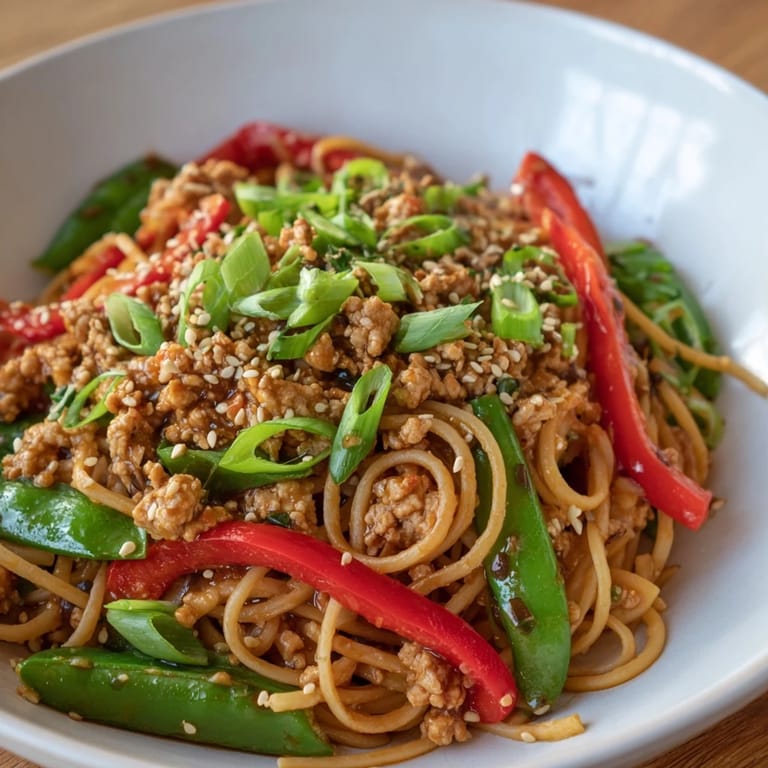
Pin What struck me most about this dish the first time I made it was how quickly it went from individual components to something that felt cohesive and intentional. There's a moment, right when the pasta hits the skillet, where everything stops being separate ingredients and becomes dinner.
Building Layers of Flavor
The key to this dish tasting restaurant-quality on a Tuesday night is understanding that you're not just mixing things together—you're layering flavor at each step. The chicken browns first and develops a depth that plain boiled chicken never would. The aromatics toast and release oils that perfume everything that follows. The vegetables add brightness and texture. The sauce ties it all together with its sweet-savory complexity. This isn't about fancy technique; it's about letting each element do its job before moving to the next.
Customizing Without Losing the Soul
Ground turkey works beautifully here if you want something leaner, and pork brings a richer flavor that's honestly exceptional. For a vegetarian route, firm tofu pressed and crumbled gives you that textural contrast with the vegetables, and plant-based ground meat is convincing enough that no one will notice the difference. What matters is that the sauce remains the star, so whatever protein you choose, make sure it's neutral enough to let hoisin and sesame take center stage.
Timing and Temperature Matter More Than You'd Think
This dish comes together quickly, which is its greatest strength and its one small trap—rush it and you end up with overcooked vegetables or a sauce that breaks. Keep your heat at medium-high, not raging, and give each element just enough time to do what it's supposed to do. The moment the pasta hits the skillet and everything comes together, you're just 30 seconds away from finished, so don't walk away from the stove.
- If your sauce seems too thick, add pasta water a tablespoon at a time until it reaches the consistency of glossy glaze.
- Serve immediately after finishing—this dish is best when it's still steaming and everything tastes fresh.
- Leftovers work fine cold or reheated gently in a skillet with a splash of water, though the vegetables soften a bit more.
 Pin
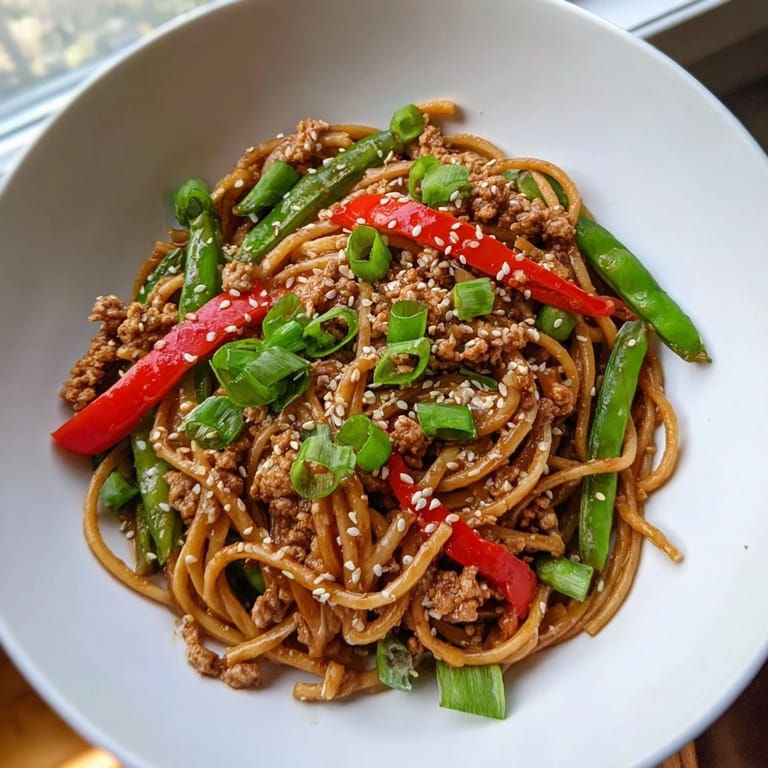
Pin This dish taught me that fusion cooking isn't about being clever or showing off—it's about following your instincts and trusting that good ingredients in the right combination will always make something worth eating. I still make it when I want something delicious fast.
Recipe FAQ
- → Can I substitute ground chicken with other proteins?
Yes, ground turkey or pork can be used interchangeably for similar texture and flavor profiles.
- → What type of pasta works best with this dish?
Linguine is ideal for holding the sauce and pairing with the stir-fried ingredients, but other long noodles like spaghetti work well.
- → How can I make the dish spicier?
Adding more chili garlic sauce or fresh chili flakes will increase the heat without overpowering the balance of flavors.
- → Is there a vegetarian option for this dish?
Firm tofu or plant-based grounds can replace the chicken, and be sure to choose vegetarian-friendly hoisin sauce.
- → What garnishes enhance the flavor and presentation?
Toasted sesame seeds and fresh herbs like cilantro or additional green onions add texture and a fresh finish.