 Pin
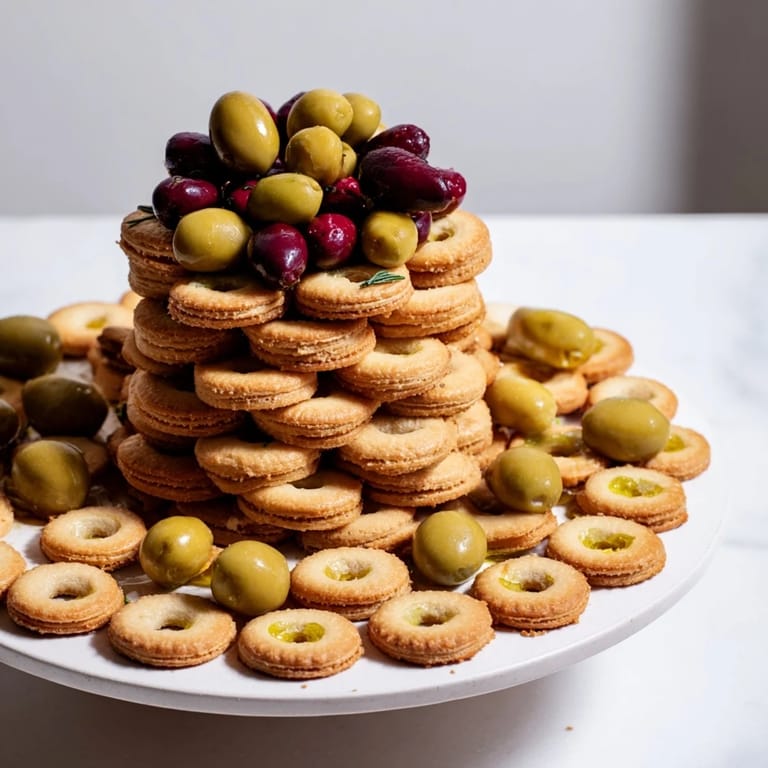
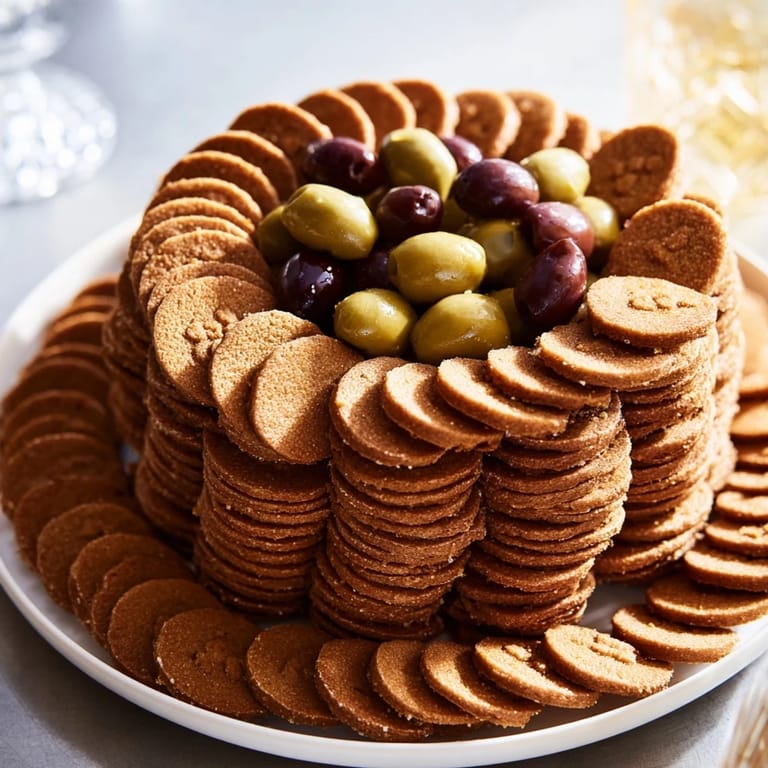
Pin I stumbled upon this platter idea while daydreaming during a history documentary about ancient Rome, imagining what gladiators might have snacked on between arena battles. Of course, the reality is far more elegant—a simple arrangement of crackers and olives that transforms any table into something theatrical and memorable. My friends laughed when I first described it, but the moment I set it down at a dinner party, the room went quiet with appreciation. There's something about food arranged with a story that makes people lean in closer. Now it's become my signature move for impressing guests without actually cooking.
The first time I made this for a summer gathering, my nephew—who's usually glued to his phone—actually put his device down to help me arrange the crackers in circles. He declared himself the "architect of the arena" and got genuinely invested in making sure each layer looked perfect. Watching him take pride in the arrangement reminded me that food isn't just about taste; it's about creating moments where people show up fully present.
Ingredients
- Round or oval crackers (100–120 g, about 40–50 pieces): Choose ones with texture and subtle flavor so they don't compete with the olives—I prefer ones that are sturdy enough to hold a topping without breaking, and I've learned that slightly thicker crackers create better visual impact when stood upright.
- Mixed olives (1 cup, about 150 g, pitted): The pitted part matters because nobody wants to fish around for pits while mingling; mix green and black for visual drama and complexity of flavor.
- Fresh parsley (2 tbsp, finely chopped): This is optional but transforms the platter from monochromatic to vibrant—the green hits different when you're aiming for that Roman grandeur.
- Extra virgin olive oil (1 tbsp for drizzling): A gentle drizzle ties everything together with a silky sheen and adds a whisper of richness that makes people wonder if there's more to this than meets the eye.
- Cubed cheese such as aged provolone or mozzarella (50 g): Aged provolone brings a sharper, more sophisticated bite, while mozzarella keeps things creamy and mild—choose based on your crowd's preferences.
- Cherry tomatoes (50 g, halved): These add pops of color and brightness; halving them lets people grab just the right amount without the platter looking picked over.
Tired of Takeout? 🥡
Get 10 meals you can make faster than delivery arrives. Seriously.
One email. No spam. Unsubscribe anytime.
Instructions
- Set your stage:
- Find your largest round serving platter or board—this is your arena, and the bigger the better for impact. A wooden board feels more rustic and authentic than ceramic if you have the choice.
- Build the outer circles:
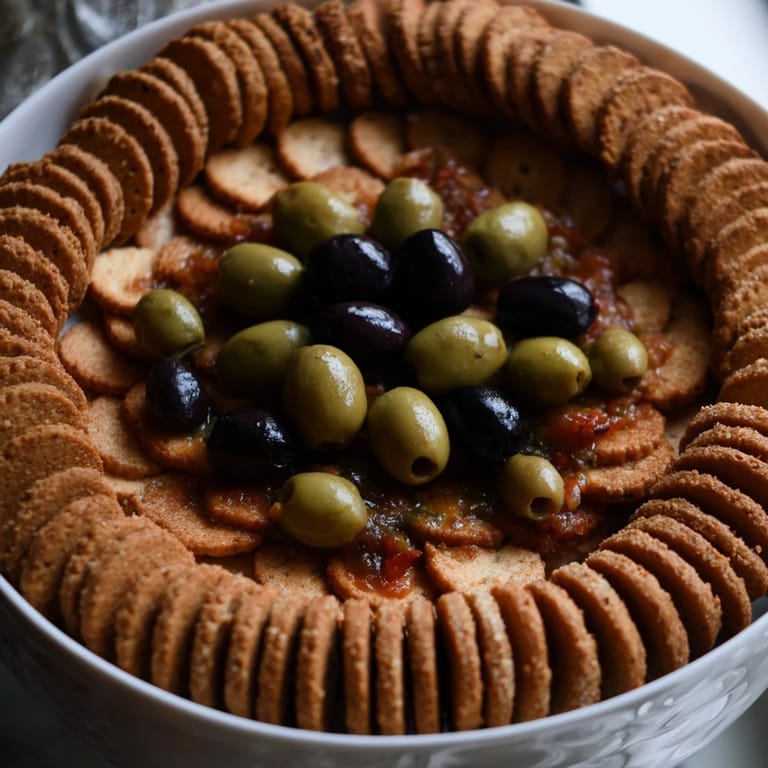
- Stand your crackers upright around the edge, slightly overlapping them in concentric circles like you're creating tiered seating. Don't stress about perfection; a few tilting at charming angles actually looks more organic and inviting than military precision.
- Create the gladiator mound:
- Pile your mixed olives in the center of the platter, creating a generous mound that commands attention. This is the focal point, so don't be shy—abundance reads as generosity.
- Add the supporting cast:
- Scatter your cubed cheese and halved cherry tomatoes around the olive center in pockets of color. Think of them as filling in the gaps and adding visual intrigue.
- Finish with flourish:
- Shower the olives with chopped parsley for that verdant pop, then drizzle everything lightly with olive oil. The oil catches the light and makes the whole thing glow.
- Bring it to the table:
- Serve immediately while everything is crisp and the arrangement is still undisturbed—this is your moment to let it shine before people dive in.
 Pin
Pin There was this moment at a dinner party where someone reached for a cracker, then paused and asked, "Wait, is this edible art or actual food?" I realized right then that the best entertaining happens when people don't know which one it is. That question alone made the platter worth every minute.
Variations That Work
Once you understand the basic template—a circular base with a dramatic center—you can swap elements based on what you have or what your guests prefer. Breadsticks standing upright create an even more Roman feel, crostini give you a toasted crunch, and even thin slices of focaccia can work if you're feeling adventurous. I've made vegan versions by swapping cheese for roasted chickpeas, and gluten-free versions using rice crackers, and honestly, the structure itself carries the concept regardless of the specifics.
The Pairing Play
I learned early on that this platter sings when paired with the right beverages—a crisp Italian white wine like Pinot Grigio echoes the flavors without overwhelming them, sparkling water with fresh lemon adds brightness, or even a light rosé if you're leaning into the celebratory vibe. The key is not fighting the simplicity of the food; your drink should complement, not compete.
Hosting Secrets
This platter teaches you something valuable about entertaining: people are drawn to food that tells a story and looks intentional. It's not about having expensive ingredients or spending hours cooking; it's about arrangement, presentation, and the confidence to let something simple feel special. When guests see you've put thought into the how and why, they relax and enjoy the moment more fully.
- Set this out before people get too hungry so they actually pause to admire it before demolishing it.
- Keep a small tongs or toothpicks nearby so people can serve themselves without fingers colliding over the olives.
- If you're concerned about gluten, just swap in gluten-free crackers and let guests know—one small substitution doesn't diminish the magic.
 Pin
Pin This platter has become proof that the best entertaining isn't about complexity—it's about creativity and care. Serve it with confidence and watch your table transform into a conversation starter.
Recipe FAQ
- → How do I arrange the crackers to mimic the Colosseum tiers?
Place the crackers upright or slightly overlapping in concentric circles along the edge of a large round platter, creating two or three layers for a tiered effect.
- → What olives work best as the centerpiece?
Use a mix of green and black pitted olives to create a visually appealing mound that represents gladiators in the arena's center.
- → Can I add other accompaniments to enhance the platter?
Yes, cubed aged provolone or mozzarella cheese and halved cherry tomatoes can be arranged around the olives for extra flavor and color.
- → Are there options for dietary restrictions?
For gluten-free guests, substitute crackers with gluten-free varieties. Vegan alternatives can replace cheese, or omit optional additions entirely.
- → What garnishes complement the flavors best?
Finely chopped fresh parsley and a light drizzle of extra virgin olive oil add freshness and enhance the presentation.