 Pin
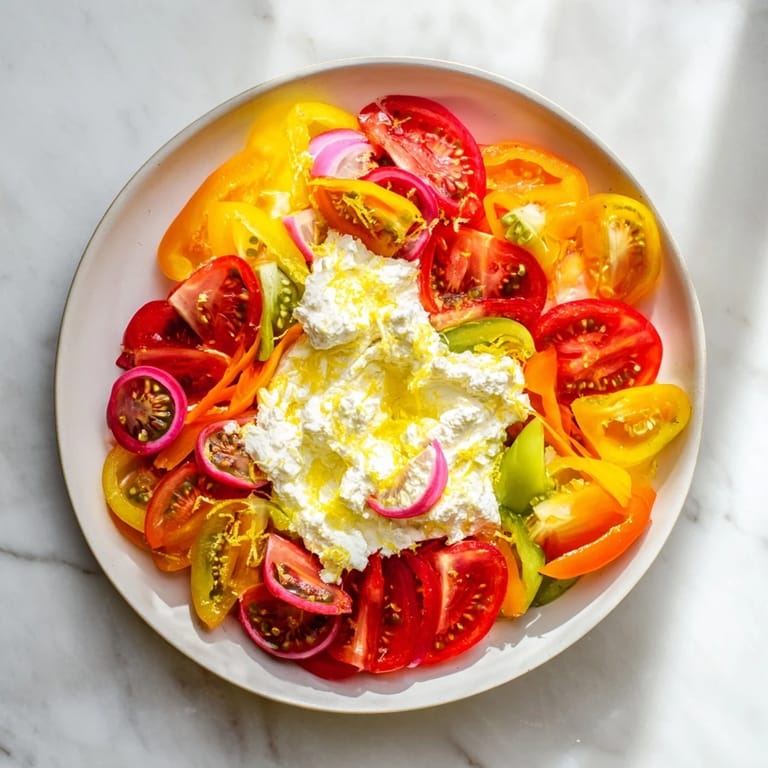
Pin I discovered this salad by accident on a rainy afternoon when I was trying to impress someone who claimed they didn't like salads. I had all these vegetables scattered across my counter—tomatoes, peppers in every color, berries—and instead of chopping them into a bowl, I arranged them in radiating stripes on a platter. The moment I stepped back and saw those colors fan out like light through a prism, I knew I'd stumbled onto something special. What started as visual playfulness became a dish that's somehow both effortless and showstopping.
The first time I made this for a dinner party, my friend arrived early and caught me mid-arrangement, hands full of peppers and an expression of pure concentration. She laughed and said it looked like I was painting, not cooking. By the time everyone sat down and saw that prism spread across the table, the whole room went quiet for a moment. That silence, right before people dig in, is when I realized this salad does something beyond nutrition—it creates an experience.
Ingredients
- Ricotta cheese or Greek yogurt: This creamy white center is your visual anchor and flavor foundation; it needs to be smooth and spreadable, so let it come to room temperature first.
- Extra-virgin olive oil: Use a fruity one if you have it—it matters more here since the vegetables are raw.
- Lemon zest: This tiny addition brightens the entire dish before anyone even tastes the dressing.
- Cherry tomatoes: Halve them just before assembly so they don't release too much juice and make everything soggy.
- Bell peppers—red, orange, and yellow: Slice them thin and keep them separate by color; they're the backbone of your visual story.
- Carrots: A vegetable peeler creates ribbons that are thinner and more elegant than shreds.
- Corn kernels: Fresh or frozen work equally well; just make sure they're at room temperature before arranging.
- Cucumber: Cut on a slight bias so the pieces feel less ordinary.
- Edamame: These little green pods add protein and a pop of color that somehow feels both playful and sophisticated.
- Fresh herbs: Save these for the very end or they'll bruise and turn dark.
- Blueberries and purple cabbage: This is your blue layer, and the contrast between soft berries and crisp cabbage is intentional.
- Red grapes and radishes: Together they create that violet-to-pink transition that makes the color wheel feel complete.
Tired of Takeout? 🥡
Get 10 meals you can make faster than delivery arrives. Seriously.
One email. No spam. Unsubscribe anytime.
Instructions
- Make the white base:
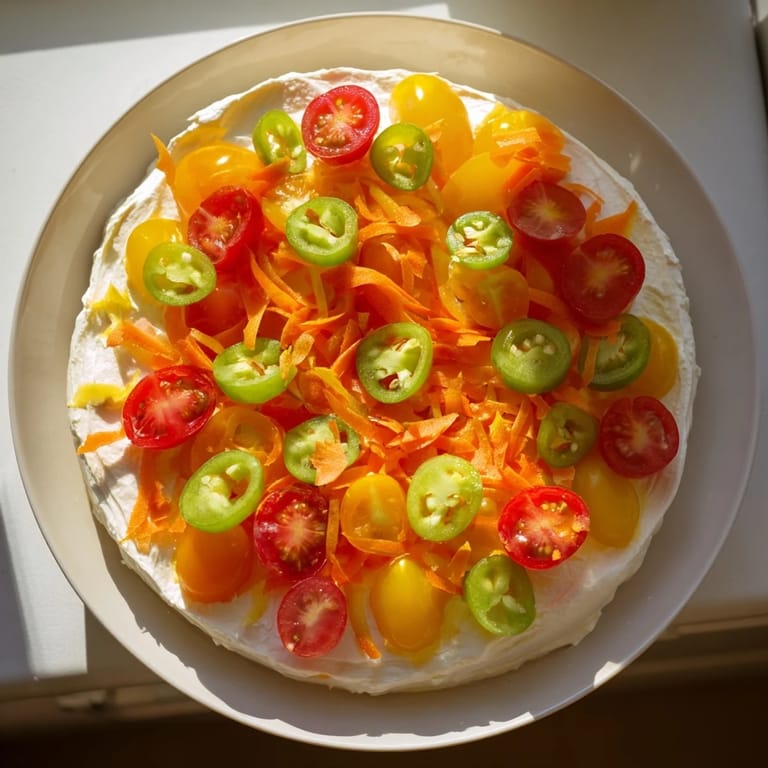
- Mix your ricotta with olive oil, lemon zest, salt, and pepper until it's the texture of soft butter. Spread it onto the center of your platter in a rough circle—think imperfect and organic, not a perfect disk.
- Prep your colors:
- Arrange each color group in its own small bowl before you start building. This way you're not fumbling around looking for the next ingredient while your hands are full.
- Fan from the center:
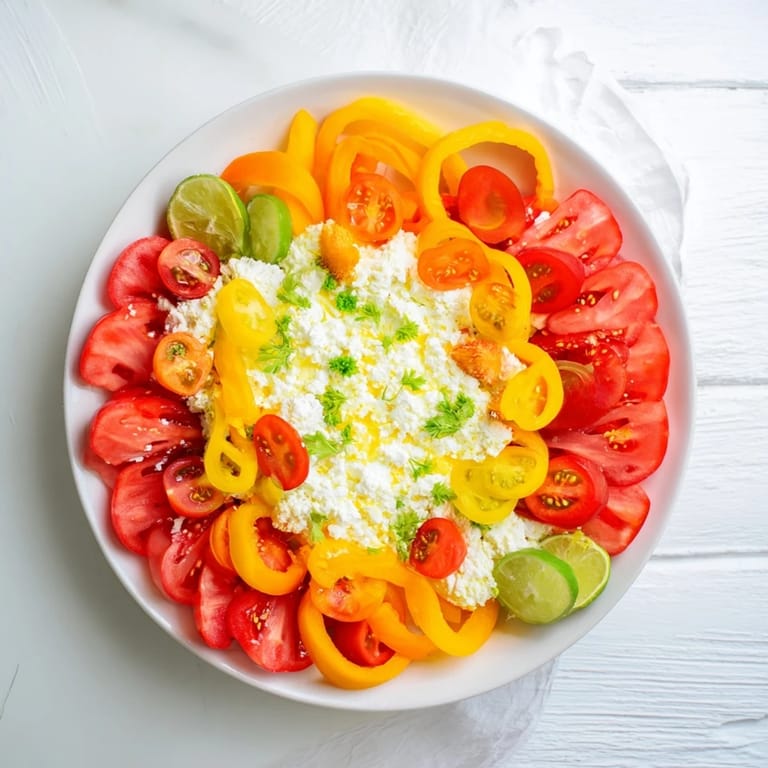
- Starting right at the edge of that white circle, lay down your red vegetables in a stripe, then orange next to it, then yellow, and so on. The key is to overlap them just slightly so the colors blend at the edges like actual light through a prism.
- Keep it neat:
- Use your hands or the back of a spoon to gently tuck vegetables where they belong. Work slowly—this isn't about speed, it's about the arrangement creating that moment of visual delight.
- Make the dressing:
- Whisk together olive oil, lemon juice, honey, salt, and pepper in a small bowl. Taste it before you drizzle—it should make you want to eat it with a spoon.
- Final touches:
- Drizzle the dressing just before serving, or let people add their own at the table. A handful of fresh herbs and a crack of pepper finishes it perfectly.
 Pin
Pin There was a moment during that dinner party when someone took a photo of the salad and everyone else immediately wanted to do the same. It became less about eating and more about capturing that feeling of brightness, like we'd somehow brought something luminous into the room. That's when I understood—this salad isn't trying to be fancy, it's just unabashedly beautiful and honest about it.
Making It Your Own
The structure of this salad is flexible enough that you can swap vegetables without breaking the magic. If you can't find good blueberries, use blackberries or purple grapes for that blue layer. No edamame? Snap peas or sliced zucchini work just as well. The whole point is that you're working with what you have while respecting the color progression, not following a rigid formula.
Elevating the Experience
I've learned that the small additions—the ones that feel optional—are often what make people remember a dish. Toasted pumpkin seeds add a nutty crunch that catches you off guard in the best way. Edible flowers (if you can find them) create this delicate visual layer that makes the whole thing feel like it's from somewhere magical. Microgreens add a peppery note and fill any gaps in the color arrangement.
Pairing and Serving
This salad sits beautifully alongside grilled fish or roasted chicken if you want to turn it into a full meal, but honestly, it's substantial enough to stand on its own. A crisp Sauvignon Blanc or a light Pinot Grigio amplifies the brightness rather than competing with it. Serve it straight from the platter so people can see the whole prism before it gets mixed together—that visual moment is half the pleasure.
- Chill your serving platter in the freezer for 15 minutes before assembling if your kitchen is warm.
- If you're serving this at a picnic or potluck, transport the components separately and assemble on site to keep everything fresh.
- Leftovers are best eaten the same day, but if you have extras, store the dressing separately so the vegetables don't get limp.
 Pin
Pin This salad reminds me that food doesn't always have to be complicated to be memorable. Sometimes the simplest act—arranging good vegetables in order of their color—creates something that stays with people long after they've finished eating.
Recipe FAQ
- → What ingredients create the white base?
The white base is made from ricotta cheese or Greek yogurt, combined with extra-virgin olive oil, lemon zest, salt, and pepper to add creaminess and tang.
- → How are the colorful layers arranged?
Each color group—red, orange, yellow, green, blue, and violet—is neatly fanned out in stripes around the central white base to mimic a prism effect.
- → What dressing complements the salad?
A light dressing made from olive oil, lemon juice, honey or agave, salt, and pepper is drizzled lightly to enhance the fresh flavors without overpowering them.
- → Can this dish be made vegan?
Yes, by substituting the ricotta or Greek yogurt with vegan cream cheese or a plant-based alternative, the dish can be adapted for a vegan diet.
- → What additional toppings can be added?
To add texture and variety, toasted nuts or seeds such as pumpkin, sunflower, or pine nuts can be sprinkled on top, along with optional microgreens or edible flowers.