 Pin
Pin The first time I made laksa, I was standing in a Malaysian friend's kitchen watching her grandmother work her magic with a pot that seemed impossibly small for all that flavor. She moved with such ease—stirring, tasting, adjusting—that I thought I'd never replicate it. Years later, I realized the magic wasn't some secret ingredient; it was the confidence to let the broth simmer long enough for everything to come together. Now when I make this, that memory of her calm presence guides me through each step.
I remember serving this to a group of friends on a rainy evening, and watching their faces light up when they tasted that first spoonful of broth—that exact moment when someone realizes they're about to have a really good dinner. One guest came back for seconds and asked if I'd learned to cook in Malaysia, which made me laugh because I'd learned it mostly through trial and error in my own kitchen, with the help of a very patient friend who kept texting me tips.
Ingredients
- Vegetable oil: Use a neutral oil that can handle medium heat without smoking; it's your foundation for building flavor through the aromatics.
- Onion, garlic, ginger, and lemongrass: These four create the aromatic base that makes people ask, 'What is that incredible smell?'—don't rush this step.
- Laksa paste: This is the backbone of your broth; store-bought works perfectly and saves you from making it from scratch, though homemade is rewarding if you're feeling adventurous.
- Coconut milk: Full-fat is essential here; it creates that silky richness that makes this soup feel luxurious.
- Vegetable broth: This gives you the volume and lets the laksa paste flavor shine without overwhelming it.
- Rice noodles: Thick ones hold the broth better than vermicelli, but either works—just don't overcook them.
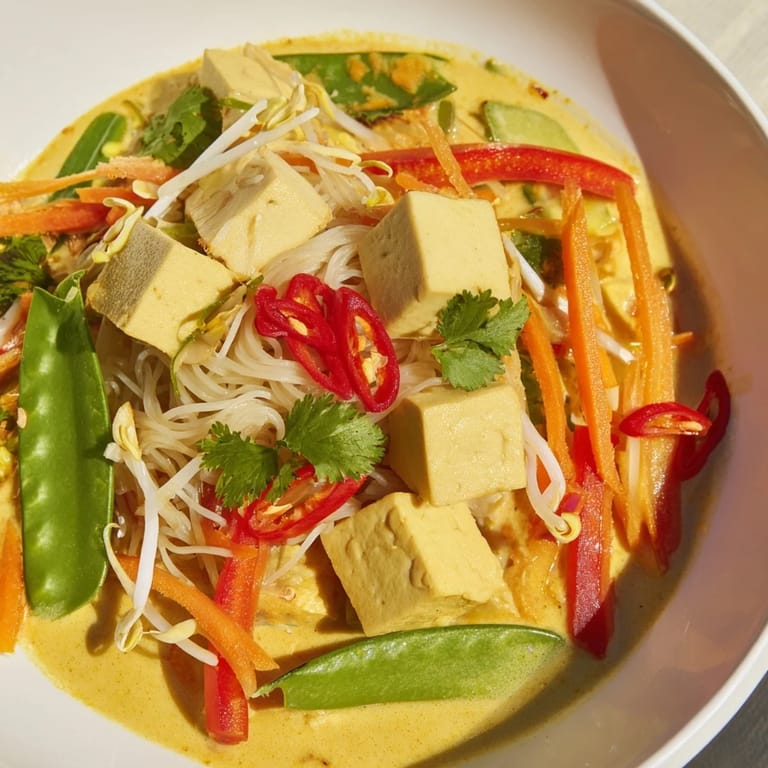
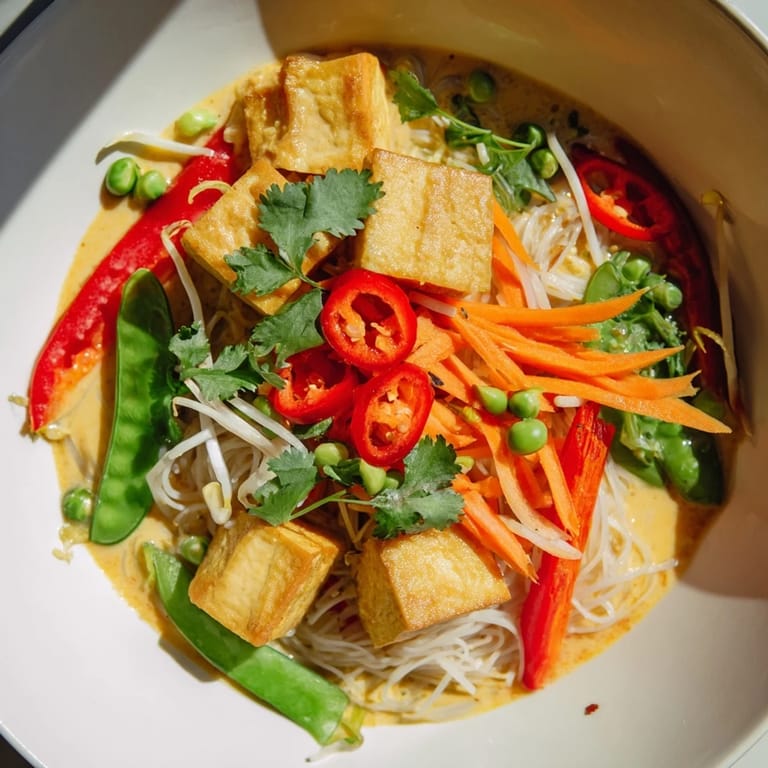
- Firm tofu: Pressing it before frying helps it develop a crispy exterior that contrasts beautifully with the creamy broth.
- Bean sprouts, carrots, bell pepper, snow peas, and spring onions: This vegetable mix gives you color, crunch, and nutrition—feel free to swap based on what's fresh.
- Fresh cilantro and lime: These are non-negotiable; they're what make the final bowl feel bright and alive.
Tired of Takeout? 🥡
Get 10 meals you can make faster than delivery arrives. Seriously.
One email. No spam. Unsubscribe anytime.
Instructions
- Build your fragrant base:
- Heat the oil and add onion, garlic, ginger, and lemongrass together, letting them soften for 3–4 minutes until your kitchen smells like a Southeast Asian market. You'll know you're there when the onions turn translucent and the aromatics are releasing their oils.
- Wake up the laksa paste:
- Stir in the paste and cook for 2 minutes—this toasting step deepens its flavor and removes any raw taste. You'll see it start to caramelize slightly at the edges of the pot.
- Create the broth:
- Pour in coconut milk and vegetable broth slowly, stirring as you go to prevent lumps and help everything combine smoothly. Bring to a gentle simmer and let it bubble quietly for 10 minutes while you prep everything else.
- Season and taste:
- Add soy sauce, sugar, and a pinch of salt; stir and taste. This is where you adjust—if it's too spicy, add a touch more coconut milk; if it needs depth, a little more soy sauce helps.
- Cook your noodles and tofu:
- While the broth simmers, prepare the rice noodles according to the package and fry your tofu cubes in a separate skillet until they're golden and slightly crispy on the outside. This parallel cooking keeps everything moving forward.
- Add vegetables to the broth:
- In the last few minutes, add carrots, bell pepper, and snow peas directly to the simmering broth; they'll cook in 3–4 minutes and stay tender-crisp, which is exactly what you want.
- Assemble your bowls:
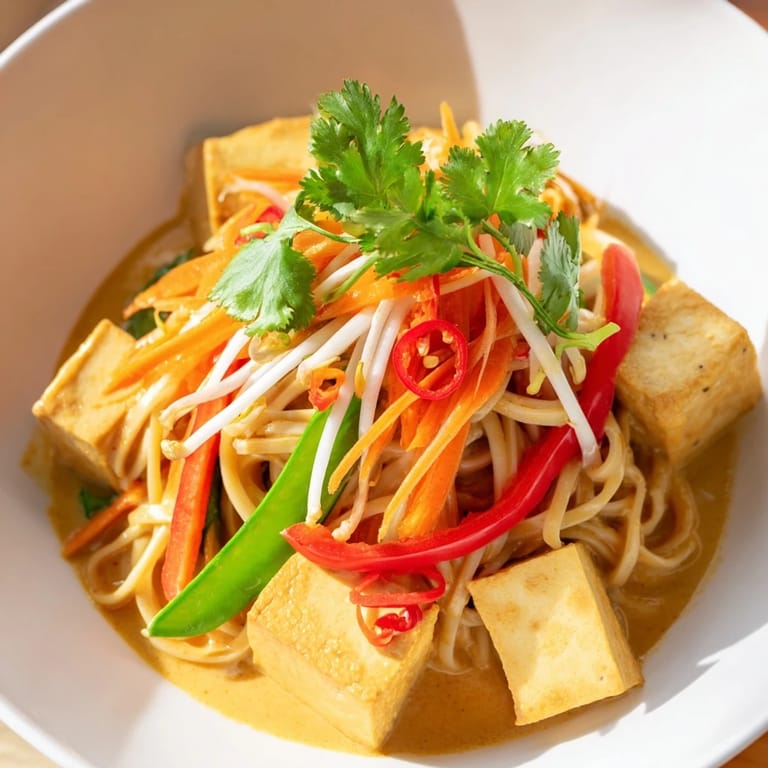
- Divide noodles among bowls, ladle hot broth and vegetables over them, then crown each bowl with fried tofu, fresh bean sprouts, spring onions, cilantro, and a pinch of chili slices. Serve with lime wedges and let everyone squeeze and adjust to their taste.
 Pin
Pin There's something about laksa that turns an ordinary Tuesday dinner into an occasion—maybe it's the aroma, or the way everyone leans over their bowl to get the perfect ratio of noodles, broth, and toppings, but it feels like celebration in a bowl. The first time my partner asked me to make it a second time in one week, I knew I'd found something special.
Making It Your Own
This recipe is a canvas, not a prescription. I've made it with mushrooms and bok choy when that's what I had on hand, and honestly, the mushrooms add an earthy depth that's wonderful. The beauty of laksa is that it's forgiving—the broth is so flavorful that it carries whatever vegetables you add. One evening I realized I was out of snow peas, so I threw in some sliced zucchini instead, and no one even noticed the substitution because the broth was what they were there for.
Beyond Vegetarian
While this version celebrates vegetables and tofu, laksa is traditionally made with seafood or chicken, and it's easy to adapt. If you want to add protein beyond tofu, sliced chicken thighs work beautifully—just cook them gently in the broth in the last few minutes so they stay tender. A soft-boiled or hard-boiled egg halved on top is also traditional and adds richness that some people crave. I've also seen versions with shrimp that are stunning, and if you go that route, add them in the final 2 minutes so they just turn pink and stay tender.
Storing and Reheating
The broth is the real star here, and it keeps beautifully in the refrigerator for up to 5 days or in the freezer for a couple of months. When you're ready to eat again, reheat the broth gently, cook fresh noodles, and assemble new toppings—this way everything tastes fresh and the textures stay crisp. I often make a double batch of broth when I'm already cooking, because knowing I have laksa waiting in the freezer is like having a promise of a good dinner on a rough day.
- Store the broth separately from the noodles and toppings for the best results.
- Toast your laksa paste with fresh aromatics again if you're reheating frozen broth—it takes 5 minutes and adds life back to the flavors.
- Cook noodles fresh each time; they'll taste and feel infinitely better than reheated ones.
 Pin
Pin There's comfort in knowing how to make something this good, and laksa has become one of those dishes that feels like a hug in a bowl. Once you've made it once, you'll find yourself coming back to it again and again.
Recipe FAQ
- → What is laksa paste made of?
Laksa paste typically includes a blend of dried chilies, lemongrass, garlic, shallots, galangal, and spices, creating its distinct aromatic and spicy flavor.
- → Can I use other noodles instead of rice noodles?
Yes, thick vermicelli or other gluten-free noodles work well, absorbing the rich coconut curry broth effectively.
- → How do I ensure the broth is flavorful and balanced?
Sauté aromatics like garlic, ginger, onion, and lemongrass before adding laksa paste and liquids. Simmer to meld flavors, seasoning with soy sauce and a touch of sugar.
- → What vegetables complement this dish best?
Carrots, red bell peppers, snow peas, bean sprouts, and spring onions provide a fresh crunch and color contrast to the creamy broth.
- → How can I make this dish vegan-friendly?
Use laksa paste without shrimp or fish ingredients and substitute any non-vegan components with plant-based alternatives.
- → Can tofu be substituted with other proteins?
Firm tofu works best for texture, but you can also use tempeh or seitan for a protein boost while keeping the dish vegetarian.