 Pin
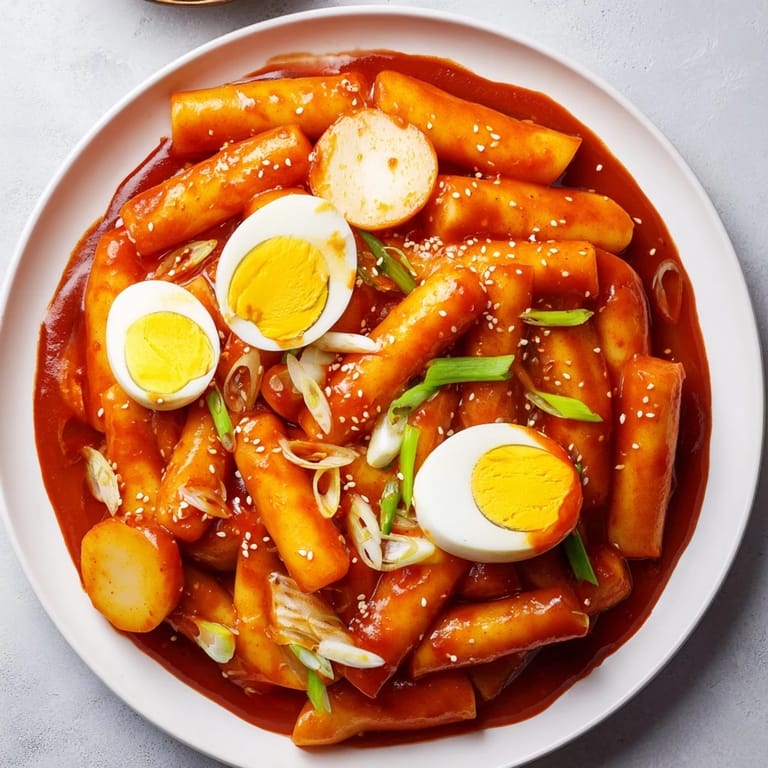
Pin The first time I made tteokbokki at home, I burned my fingers because I couldn't wait for the rice cakes to cool before testing them. That sharp sting was worth it—one bite and I understood why this humble street food had captivated me on a Seoul sidewalk at midnight, watching vendors work their magic in clouds of steam. The chewy texture, the gochujang heat creeping across my tongue, the soft-boiled egg breaking into that glossy sauce—suddenly I wasn't just eating, I was remembering the entire trip through flavors.
My partner once said tteokbokki tasted like comfort wrapped in heat, which is probably why we make it whenever someone needs feeding. I brought it to a dinner party last winter, and within minutes the whole pot was gone—people kept asking for the recipe, but honestly, it's mostly about not rushing the broth and letting the gochujang fully bloom into the liquid.
Ingredients
- Korean cylindrical rice cakes (500g): These are chewy and absorb sauce like nothing else—soaking them first makes them pliable and ready to hug the flavors.
- Gochujang (3 tablespoons): This fermented chili paste is the backbone, bringing umami and a slow, rolling heat that builds beautifully.
- Gochugaru (2 tablespoons): The flakes add texture and an extra layer of chile depth that paste alone won't give you.
- Soy sauce (2 tablespoons): Use a good one—it rounds out the spice and adds a savory anchor to all that heat.
- Honey or corn syrup (1 tablespoon): This creates that signature glossy, sticky coating and balances the spice with sweetness.
- Garlic (2 cloves, minced): Fresh garlic melts into the sauce and adds a sharp, clean note.
- Toasted sesame oil (1 teaspoon): A small amount goes a long way—it brings nuttiness and aroma without overpowering.
- Water (3 cups): The vessel for everything, though kombu and anchovies transform it into something worth tasting on its own.
- Dried kelp kombu (1 piece, 10x10 cm): This infuses the broth with subtle umami and sea-sweetness that ties everything together.
- Dried anchovies (8, cleaned): They dissolve into the broth, adding depth you can taste but not identify—skip these for vegetarian, but know the flavor shifts.
- Boiled eggs (4 large): These become little pockets of richness that balance the sauce's intensity.
- Onion (1 small, sliced): It softens into the sauce and adds gentle sweetness.
- Green onion (1 sheet, sliced): A last-minute brightness that cuts through the richness.
- Fish cake (1 sheet, sliced, optional): Adds chewiness and a subtle umami that complements the rice cakes.
- Toasted sesame seeds (1 tablespoon): Finish with these for nuttiness and a visual signal that you cared.
Tired of Takeout? 🥡
Get 10 meals you can make faster than delivery arrives. Seriously.
One email. No spam. Unsubscribe anytime.
Instructions
- Soak the rice cakes:
- If your rice cakes are cold or hard from the fridge, give them 10 minutes in warm water. You'll feel them soften and become pliable—this small step prevents them from staying rigid in the sauce.
- Make the broth:
- In a medium saucepan, combine water, kombu, and cleaned anchovies over medium heat. Bring to a gentle boil, then let it simmer for 10 minutes—this isn't rushing. The broth turns amber and fragrant as the kelp and fish do their work. Remove both solids and taste the liquid; it should be subtly sweet and savory, nothing fishy.
- Boil the eggs:
- While the broth works, bring another pot of water to a rolling boil and add eggs carefully. Set a timer for 8 to 9 minutes depending on how runny you like the yolk. Transfer immediately to an ice bath, then peel gently under cool running water—the white should be set and the yolk creamy gold.
- Build the sauce:
- Add gochujang, gochugaru, soy sauce, sugar, honey, minced garlic, and sesame oil to the broth and stir until everything dissolves. The mixture should darken and smell deeply spicy and a touch sweet—this is when you know the paste is fully awake in the liquid.
- Cook the rice cakes:
- Add the drained rice cakes, sliced onion, and fish cake if using to the sauce and bring to a gentle simmer over medium heat. Stir occasionally so nothing sticks to the bottom, and watch the sauce gradually thicken and coat the cakes. This takes 10 to 12 minutes and is worth every stir.
- Add the eggs:
- Once the rice cakes are tender and chewy and the sauce has reduced, nestle the boiled eggs into the pot and simmer gently for 2 to 3 minutes just to warm them through.
- Finish and serve:
- Scatter green onions and sesame seeds over the top and serve immediately in a shallow bowl with some of that glossy sauce poured over everything. Eat while it's hot and the steam rises around your face.
 Pin
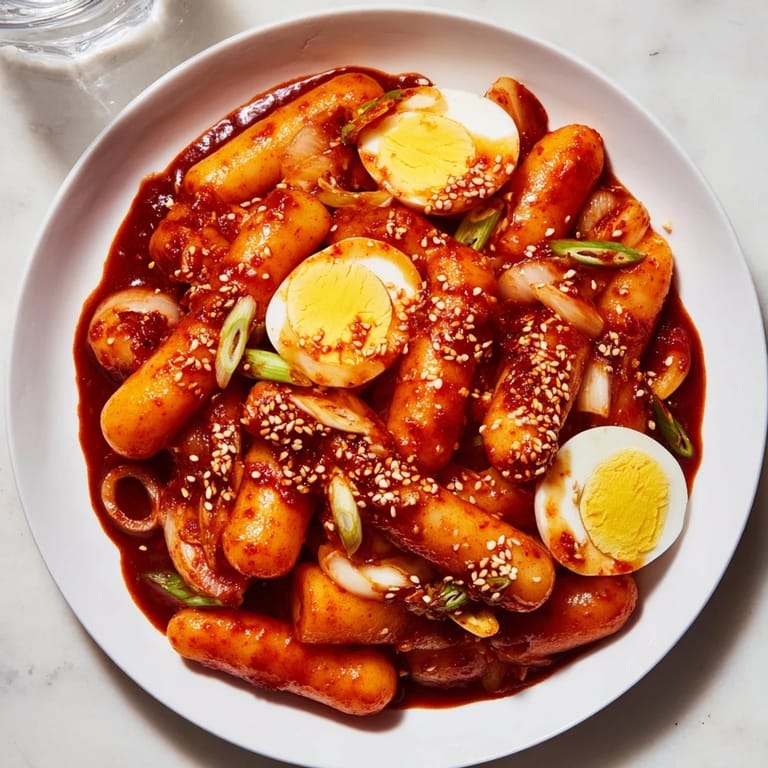
Pin I once made tteokbokki for my Korean neighbor to thank her for lending me perilla leaves, and she took one bite, nodded, and said, 'You finally understand.' That simple acknowledgment meant more than any compliment because it meant the dish had become mine in some small way.
The Sauce Is Everything
The magic of tteokbokki lives entirely in the sauce—gochujang and gochugaru aren't just spice, they're flavor. When you stir them into the broth, you're not just adding heat; you're dissolving fermented chile into every molecule of liquid. Watch it happen: the pale broth darkens, the smell shifts from simple and savory to complex and chile-forward, and suddenly you have a sauce that clings to rice cakes and tastes like intention.
Texture Is the Reason You'll Make This Again
Rice cakes have a reputation for being boring, but in a glossy sauce with soft-boiled eggs and tender onion, they're actually the star. The chewy-but-yielding texture is specific to tteok and can't be replaced—no pasta, no noodles give you quite that same satisfaction. That's why people queue up for it on the street and why you'll find yourself making it at home more often than you expect.
Variations and Additions
Once you master the basic version, tteokbokki becomes a playground. I've added shredded cabbage for crunch, thin carrot ribbons for sweetness, and ramen noodles for someone craving extra substance. A friend tosses in sliced mushrooms and lets them melt into the sauce, while another adds a splash of rice vinegar at the end for brightness. Respect the core—the gochujang sauce, the rice cakes, the soft eggs—but know that beyond those foundations, this dish welcomes improvisation.
- Cabbage wilts quickly and absorbs sauce beautifully, adding gentle sweetness and a trace of texture.
- Ramen noodles turn a snack into a meal, and they tangle with the rice cakes in a satisfying tangle of chewiness.
- A pinch of rice vinegar or lemon juice added at the very end cuts through richness and wakes up the whole bowl.
 Pin
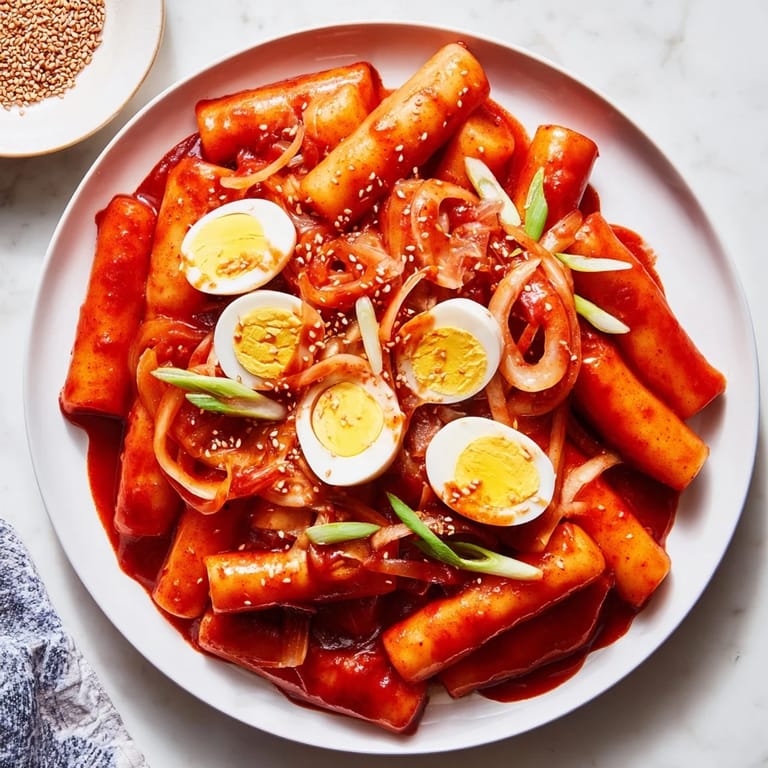
Pin Tteokbokki is the kind of dish that reminds you why cooking matters—it's humble, fast, and transforms simple ingredients into something that feeds not just your stomach but a specific kind of comfort only spice and chew can provide. Make it once, and it becomes a recipe you return to whenever the weather turns cold or someone needs feeding.
Recipe FAQ
- → How do I soften the rice cakes before cooking?
Soak the rice cakes in warm water for about 10 minutes if they are hard or refrigerated, ensuring they become tender and chewy during cooking.
- → Can I make the dish vegetarian?
Yes, omit the dried anchovies and fish cake and use vegetable broth instead to maintain rich flavors without seafood.
- → What spice level can I expect?
The dish balances heat and sweetness; adjust gochugaru and gochujang quantities to suit your preferred spice level.
- → What are good garnishes for this dish?
Green onions and toasted sesame seeds add freshness and nuttiness, complementing the spicy sauce perfectly.
- → How long should I boil the eggs?
Boil large eggs for 8-9 minutes, then cool in cold water before peeling to yield tender, flavorful boiled eggs.
- → Can I add extra vegetables?
Yes, adding cabbage, carrots, or even ramen noodles can enhance texture and flavor variety.