 Pin
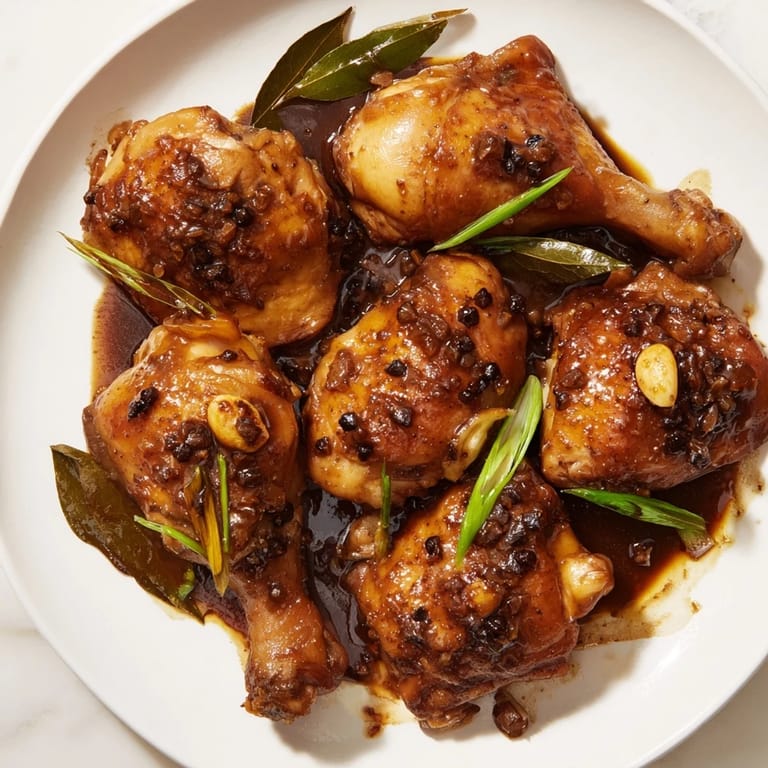
Pin My tita taught me that adobo isn't just a recipe—it's a flavor that travels through time, tasting almost identical whether it's made in Manila or in someone's small kitchen in a new country. The first time she let me handle the chicken on my own, I was nervous about overseasoning it, but she laughed and said the vinegar and soy know exactly what they're doing together. That lesson stuck with me every time I've made it since, and now it's become the dish I cook when I need to feel grounded.
There was a moment during a family dinner when my nephew asked what made the rice taste different on that particular plate. I realized he was eating a piece of chicken so tender it had practically absorbed the entire sauce—that's when adobo stopped being just food and became a small, edible story about patience and balance.
Ingredients
- Bone-in, skin-on chicken thighs and drumsticks (1.5 lbs): The bones release gelatin that enriches the sauce, and the skin crisps beautifully before braising, creating texture you can't get from boneless cuts.
- Soy sauce and cane vinegar (1/3 cup each): This is the soul of adobo—the salty and tangy play against each other in a way that makes you keep tasting more, and cane vinegar is milder than distilled, so don't skip it.
- Garlic cloves (6, smashed): Smashing them rather than mincing releases more oil and lets them soften into the sauce without disappearing completely.
- Bay leaves (2): Add a quiet, herbal depth that balances the bold soy and vinegar without taking over.
- Whole black peppercorns or ground pepper (1 tsp or 1/2 tsp): Whole peppercorns bloom during cooking, releasing their essential oils into the braising liquid.
- Brown sugar (1 tablespoon, optional): Just a touch to soften the acidity and add warmth—not sweetness, but a subtle rounding out of flavors.
- Water (1/2 cup): Dilutes the marinade slightly so the sauce doesn't become too salty or sharp as it reduces.
- Cooking oil (2 tablespoons): Use something neutral like canola or vegetable oil; you need enough to get a proper sear on the chicken skin.
- Steamed white rice and scallions for serving: Rice is the canvas for this sauce, and fresh scallions add a bright finish that cuts through the richness.
Tired of Takeout? 🥡
Get 10 meals you can make faster than delivery arrives. Seriously.
One email. No spam. Unsubscribe anytime.
Instructions
- Marinate the chicken:
- Combine chicken, soy sauce, vinegar, garlic, bay leaves, peppercorns, and brown sugar in a large bowl and toss to coat. Even 30 minutes makes a difference, but if you have the time, leave it overnight in the fridge—the vinegar and soy will penetrate deeper, and the flavors will marry beautifully.
- Prep and sear:
- Remove chicken from marinade and pat it dry (this is the secret to getting skin that browns instead of steams). Reserve the liquid. Heat oil in a large, deep skillet over medium-high heat until shimmering, then add chicken skin-side down and let it sit undisturbed for 3–4 minutes until the skin is golden and crispy.
- Build the braise:
- Flip the chicken and sear the other side for another 3–4 minutes. Pour in the reserved marinade and water, and bring everything to a boil—you'll hear the sizzle of the cold liquid hitting the hot pan, and suddenly the kitchen smells like a home-cooked meal.
- Low and slow:
- Reduce the heat to low, cover the skillet, and simmer for 25 minutes. Flip the chicken halfway through so it cooks evenly. The sauce will deepen in color as the chicken releases its juices.
- Finish and reduce:
- Uncover and simmer for another 10–15 minutes, letting the sauce reduce and thicken until it coats the back of a spoon. If there's excess fat on top (usually from the chicken skin), skim it off, though some people leave it for extra flavor.
- Taste and serve:
- Discard the bay leaves and taste the sauce—adjust with more soy sauce if it needs salt or more vinegar if it tastes flat. Serve hot over steamed rice and top with chopped scallions for color and freshness.
 Pin
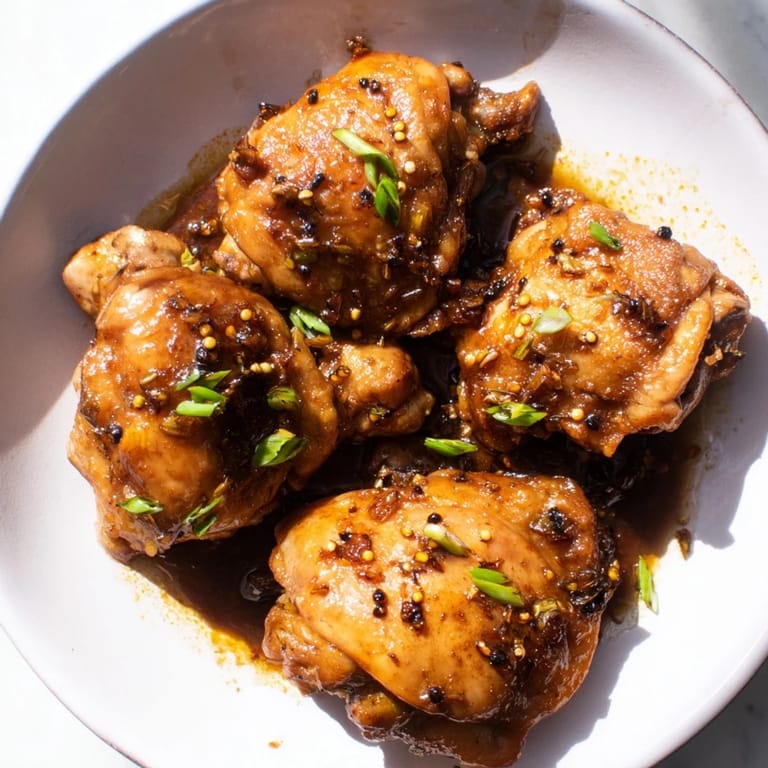
Pin I once served this to a friend who'd never had adobo before, and she asked if I'd been hiding a cooking talent the whole time—it was one of those moments when you realize that sometimes the simplest-sounding recipes carry the most depth, and that's exactly why people return to them again and again.
Why This Recipe Works
Filipino cooking is built on the harmony of salty, sour, and savory notes working together, and adobo is the perfect example of that philosophy. The vinegar prevents the soy sauce from becoming one-dimensional, and the long braise gives you tender chicken that's infused with all that flavor rather than just sitting in a sauce. Every element has a purpose, and nothing is wasted.
Variations to Try
Adobo is endlessly adaptable once you understand the core balance. You can substitute pork shoulder for chicken (it's equally traditional and takes the sauce beautifully), add a splash of coconut milk at the end for creaminess, or throw in a few dried chilies for heat. Some families add potatoes or hard-boiled eggs to stretch the dish, and it's always welcome—adobo is forgiving and generous that way.
A Note on Sourcing
The quality of your soy sauce and vinegar matters more than you'd think, so if you have access to an Asian market, that's where I'd shop. Kalamansi vinegar is the traditional choice, but cane vinegar is a respectful substitute. If you can't find either, white vinegar works in a pinch, though it's sharper—use a touch less and add a teaspoon of brown sugar to balance it.
- Look for soy sauce labeled as tamari or shoyu for a deeper, less salty result if you're sensitive to salt.
- Bone-in, skin-on chicken is non-negotiable; it's what transforms this from a simple braised dish into something special.
- Make this once, and you'll find yourself craving it at least once a month—it's one of those recipes that earns a permanent spot in your rotation.
 Pin
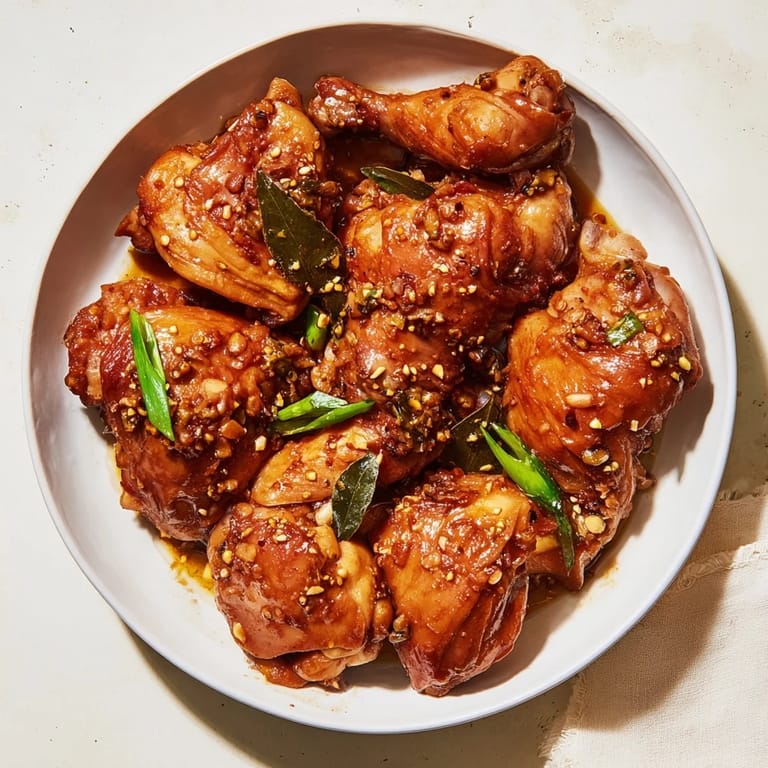
Pin This is the kind of dish that reminds you why you love cooking—it asks so little of you but gives back so much comfort. Make it once, and it becomes yours to keep.
Recipe FAQ
- → What cut of chicken works best?
Bone-in, skin-on thighs and drumsticks are ideal for tender, flavorful results.
- → How long should the chicken marinate?
Marinate the chicken for at least 30 minutes, or up to 8 hours for deeper flavor.
- → Can I substitute the vinegar type?
Yes, cane or white vinegar both work well to provide the characteristic tang.
- → Is it necessary to brown the chicken first?
Browning adds texture and depth of flavor, enhancing the final dish’s richness.
- → How can I adjust the sauce sweetness?
Adding brown sugar balances acidity, but it’s optional based on your taste preference.
- → What can I serve alongside this dish?
Steamed white rice is the traditional accompaniment, soaking up the savory sauce perfectly.